

ecap appointed Regional Lead for Matthew Syed Consulting in the Middle East

Organisations across the Middle East can now access Mindset Advantage and Collective Advantage through ecap – and independent practitioners can become accredited in Mindset Advantage.
Track Record Is One Piece of Evidence, Not the Whole Case

Many of the searches that we have run in the region tend to follow the same pattern. Two or three credible people at final stage. All of them have done impressive things. All of them interview well. And a board that has to choose between them, largely on the strength of what they have already done somewhere else.
Tuchel, Decisive Action and the Confidence of Clarity

Despite receiving glowing praise for a half time tee talk earlier in the competition, confidence in leadership is rarely built through speeches alone. It is built in extreme moments of pressure, when the situation changes, the plan is tested, and people look to the leader for clarity.
The strongest teams build an environment where it is safe to fail, competition becomes co-creation, and people operate with greater resilience.
What Separates Leadership Teams That Perform Under Pressure
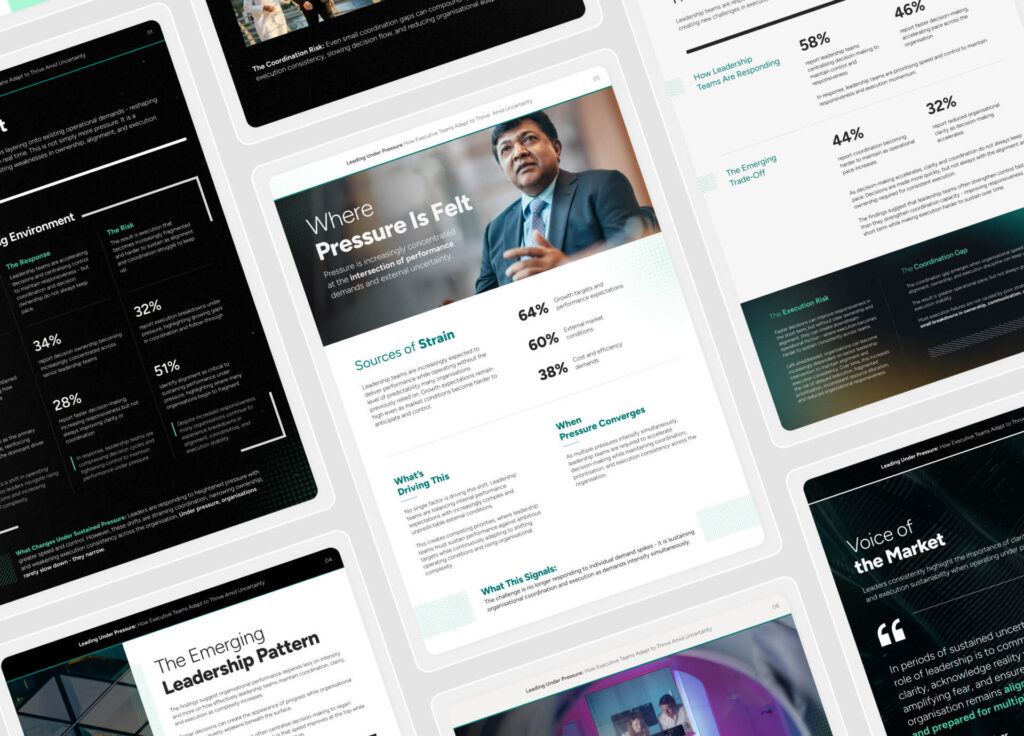
Drawing on insights from 100 senior executives and board-level leaders across complex GCC organisations, representing billions in enterprise value and hundreds of thousands of employees. This report examines how pressure reshapes leadership behaviour, coordination, and organisational performance.
From Doer to Expert to Brand: The Three Stages of Career Evolution

As careers progress, professional value evolves beyond simply what you deliver. High-performing professionals often find that results alone are no longer sufficient to drive career advancement.
This paper introduces the ecap framework – Execution, Capability, Authority, and Presence – a practical model for understanding how organisations assess and recognise value at different stages, from contributing effectively to being acknowledged as a trusted leader.
Samir Solanki Promoted to Partner in Charge

We are pleased to announce the promotion of Samir Solanki to Partner in Charge, where he will lead and further strengthen our Executive Search business while playing a central role in advancing our coaching and leadership development offerings.
Governance as a Catalyst: Episode 8 – Unlocking NRC Effectiveness in the GCC (Part 1)

In this two-part episode of the ecap Rewards Podcast mini-series, Sandrine Bardot, Rewards Senior Managing Partner at ecap, speaks with Abrar Khodari, Head of Human Capital at Xenel Industries Ltd. and Secretary to the Nomination and Remuneration Committee (NRC).
Governance as a Catalyst: Episode 8 – Unlocking NRC Effectiveness in the GCC (Part 2)

In this two-part episode of the ecap Rewards Podcast mini-series, Sandrine Bardot, Rewards Senior Managing Partner at ecap, speaks with Abrar Khodari, Head of Human Capital at Xenel Industries Ltd. and Secretary to the Nomination and Remuneration Committee (NRC).
The Evolving Executive Search Paradigm: Beyond Recruitment to Strategic Intelligence

Over the course of 2025, a significant shift was observed in the executive search landscape, marking a decisive return to client appreciation for a robust, thorough, and deeply analytical search process.
ecap Insights Podcast | Aviation as a Catalyst: Episode 7 – Evolving Aviation in the Middle East & the Future of Flight

In this episode, Nick Harvey speaks with Rob DiCastri, CEO of Serenity Aviation, about the transformation of private aviation in Saudi Arabia and the wider Middle East – and what it reveals about leadership, innovation, and market opportunity.